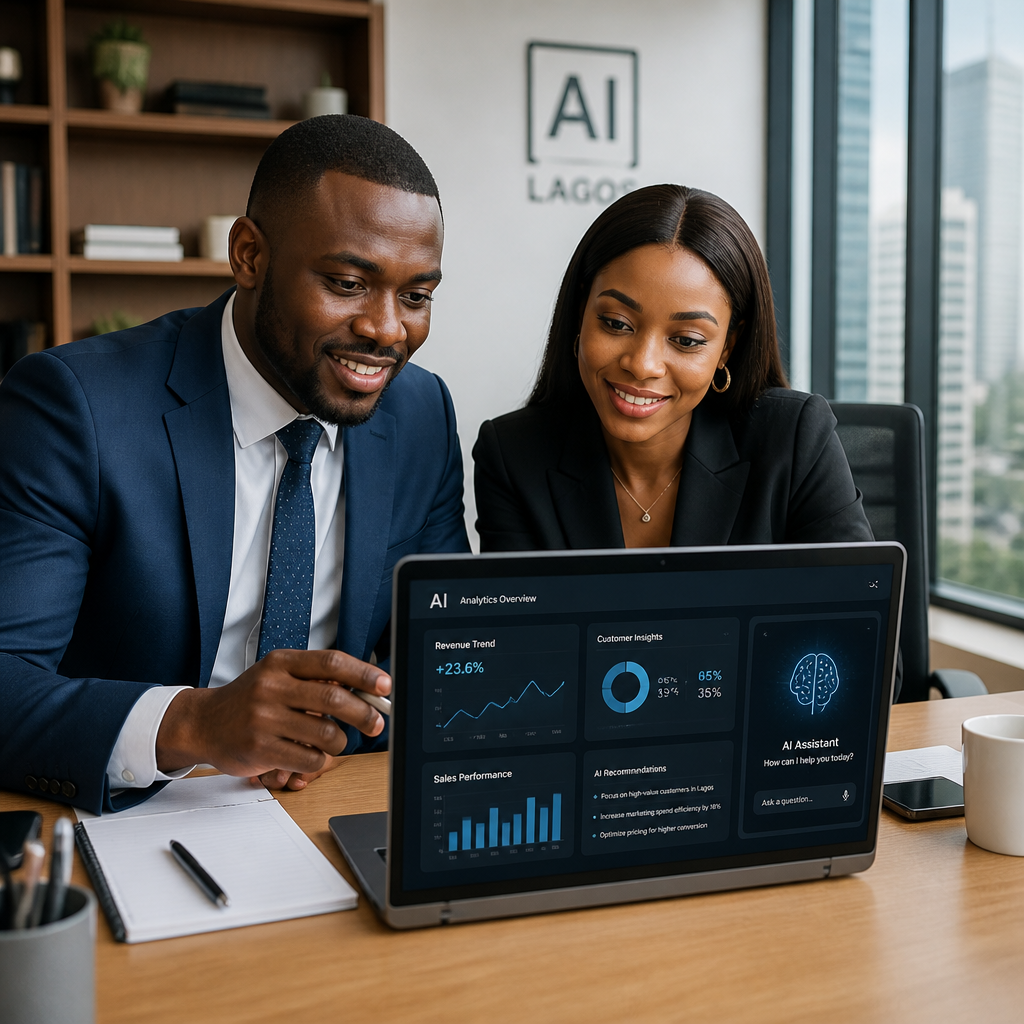
Today's HumanityAI Insight — Practical Guide
Discover how AI is transforming Nigeria's informal economy and why localization is the key to true digital inclusion. Insights from HumanityAI on tech for every Nigerian.

Today’s HumanityAI Insight: Navigating the Intersection of Tech and Tradition
In the bustling heart of Balogun Market in Lagos or the tech hubs of Yaba, a quiet revolution is happening. It isn’t just about the latest smartphone release or a new fintech app hitting the Google Play Store; it is about how everyday Nigerians are leveraging Artificial Intelligence to solve hyper-local problems. At HumanityAI, we believe that the future of technology isn't just global—it's deeply personal and intensely regional.
The Reality of the Informal Economy
Nigeria’s economy is powered by the informal sector. From the petty trader who manages ₦50,000 in daily turnover to the tailor who serves an entire local government area, these businesses are the lifeblood of our nation. However, for a long time, high-level technology felt like something reserved for the big banks in Victoria Island. The barrier wasn't just cost; it was accessibility and language.
Today’s insight focuses on the democratization of intelligence. We are moving away from a time where 'AI' meant a robot in a movie. Instead, AI is now the WhatsApp bot that helps a baker calculate their ingredient costs in real-time or the voice-to-text tool that allows an illiterate farmer to document their harvest cycles. This shift from 'High-Tech' to 'Practical-Tech' is where HumanityAI finds its purpose.
Why Localization Matters More Than Innovation
It is one thing to build a tool; it is another to build a tool that understands the nuances of a Nigerian user. When we talk about AI integration, we are talking about systems that recognize our accents, understand our slang like 'God abeg' or 'japa', and respect our socio-economic realities. Innovation without localization is just decoration.
For instance, an AI-driven credit scoring system that only looks at formal bank statements will fail the average Nigerian artisan. However, an AI that analyzes mobile airtime top-ups, utility payments, and social trust networks can unlock ₦500,000 in credit for someone who was previously 'invisible' to the banking system. This is the practical application of HumanityAI’s philosophy: technology serving humanity, not the other way around.
Overcoming the Cost of Entry
One of the biggest hurdles remains the 'Data Cost.' In Nigeria, 1GB of data is a significant expense for many. For AI to truly scale, tools must be 'lite.' We are seeing a surge in offline-first AI models and compressed neural networks that function efficiently even on 2G networks.
At HumanityAI, we advocate for solutions that don't bridge the gap by making the poor spend more, but by making the technology consume less. Whether you are using a ₦45,000 entry-level smartphone or the latest flagship, the benefits of digital insight should be reachable.
The Role of the Youth: The New Digital Artisans
Nigeria has one of the youngest populations in the world. Our youth are not just consumers; they are builders. We are seeing young Nigerians use AI to automate their freelancing gigs, generate creative content for global brands, and write code that solves local logistics nightmares.
However, there is a risk of a new 'class divide'—those who can prompt AI and those who cannot. This is why digital literacy is no longer an elective; it is a survival skill. We encourage every Nigerian entrepreneur to spend at least thirty minutes a day learning how these tools can shave two hours off their administrative tasks. Time, as they say, is money—and in this economy, every Naira saved is a victory.
Looking Ahead: The Human-Centric Future
As we look at the insights gathered today, one theme stands out: The human remains the most important part of the equation. AI can generate a report, but it cannot negotiate with a vendor in Dugbe Market. It can predict a trend, but it cannot replicate the empathy a doctor shows a patient in a rural clinic in Benue.
HumanityAI is committed to ensuring that as we move toward an automated future, we do not lose our 'Omoluabi'—our sense of character and community. We are building a world where the machine does the heavy lifting, so the human can focus on what matters: connection, creativity, and growth.
Actionable Takeaways for Today
- Audit Your Workflow: Where are you losing time? Use AI tools to automate your bookkeeping or customer responses.
- Start Small: You don't need a complex system. Start with free, localized tools that understand the Nigerian market context.
- Stay Human: Use the time saved by technology to invest in your relationships with your customers and community.
Technology is a tool, but your vision is the driver. Let’s build a smarter Nigeria, one insight at a time.